Students will understand that soil provides anchorage for roots, holds water and nutrients, is home to micro and macroorganisms, filters water, stores carbon, and is a foundation for humans to build and produce food.
This website offers a virtual training for Envirothon coaches covering soils. Provides powerpoints with notes. Also includes information on aquatics, forestry, and wildlife sections of the Envirothon. Powerpoint topics include classification of soils, redoximorphic features and hydric soils, soil consistence, capability classes (slope), erosion, and best management practices (and more).
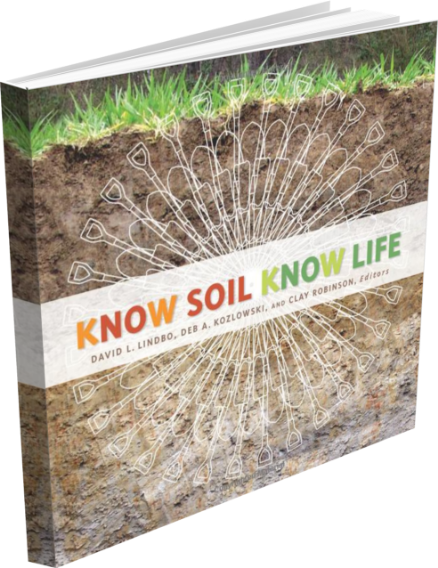
We see soil, walk on soil, and grow things in soil every day, but the vast majority of people never recognize how important soil is in sustaining life on Earth. This article presents background information linked to teaching resources to introduce K-12 students to many of the critical functions of soils. These materials were shared with teachers during a Geophysical Information for Teachers (GIFT) workshop at the annual meeting of the American Geophysical Union (AGU) in 2018.
Students play the role of nitrogen atoms traveling through the nitrogen cycle to gain understanding of the varied pathways through the cycle and the relevance of nitrogen to living things.